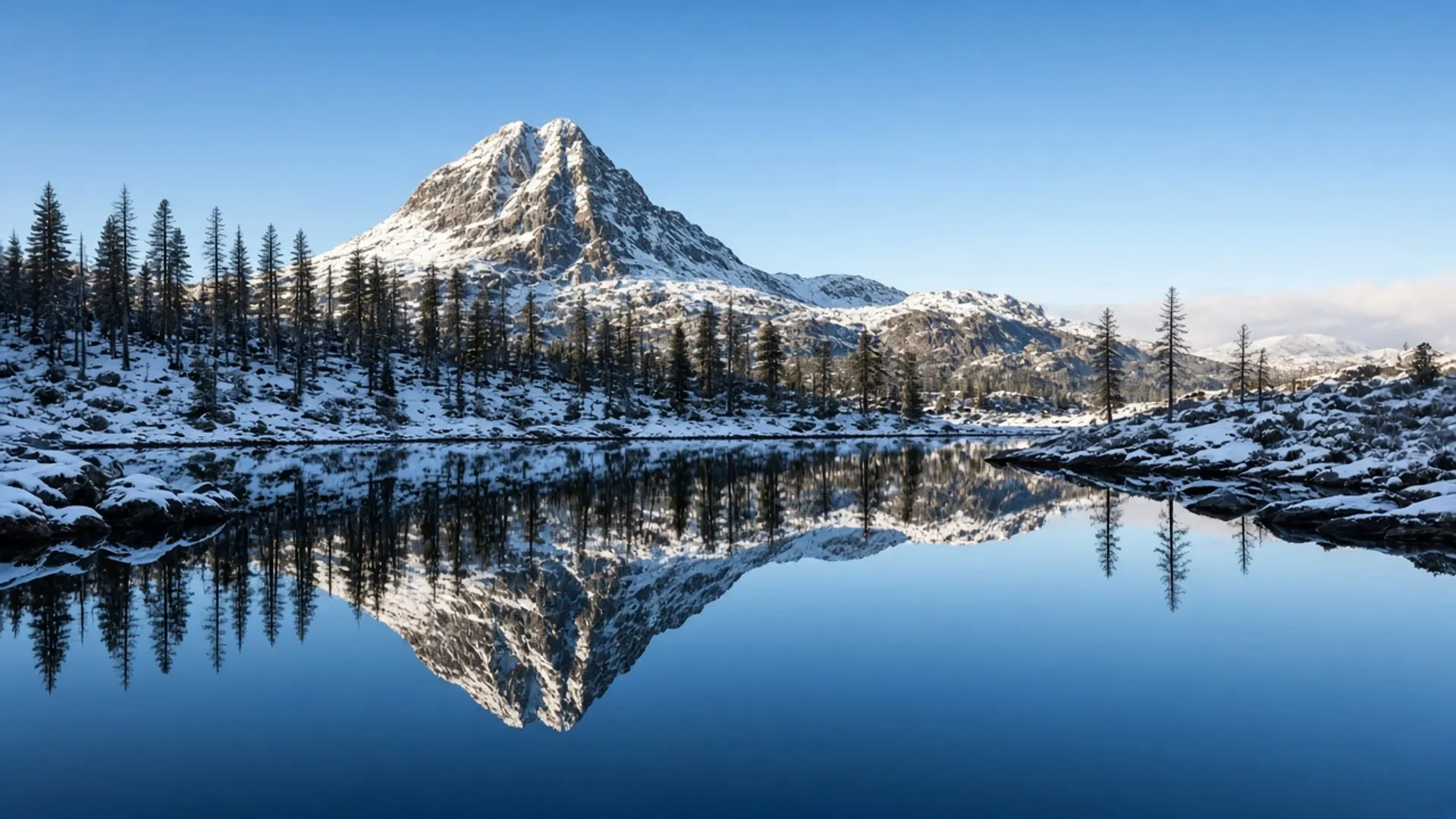
The best time of year to visit Tasmania depends on whether you want long evening light, autumn stillness, winter drama or spring wind. December to February is the warmest and the most crowded. March to May is often the most balanced for walking and beds. June to August is short, cold and beautiful in the high country. September to November is changeable, with blossom in the valleys and snow still possible on the peaks.
There is no month when the island is “closed”. There are months when a beach swim is plausible and months when a button-grass plain feels like a ship’s deck.
Summer — December, January, February
Summer is when mainland school holidays and the Australian Christmas–January leave pattern lean on Tasmania. The east coast and Hobart feel it first. Freycinet car parks, Bruny ferry queues and waterfront beds fill. The upside is real: longer days, milder nights, swimming on the east and south-east when swell and wind allow, alpine walking without an ice axe for most visitors.
If you travel in this window, book beds before you fall in love with a photograph. We will not quote a rate. We will say that “we’ll find something in Coles Bay tonight” is how people sleep in a town they did not choose.
January is the sharpest version of this. Late February can already feel like a different island.
Autumn — March, April, May
Autumn is the season this guide most often recommends for a first self-drive. Days are still workable. Deciduous trees in the settled valleys — and Tasmania’s own deciduous beech, Nothofagus gunnii, in the high country — turn. Easter can be busy; the weeks around it are often kinder.
Wineglass Bay in autumn light is the same walk with fewer elbows. The west is still the west: rain is a character, not a scandal. Mainland airline sales after Easter are a historical pattern the old site mentioned; fares move, so check a current calendar rather than our memory.
Winter — June, July, August
Winter is why Tasmania is not “Australia Lite”. Frost inland, snow on Ben Lomond, Cradle and Hartz, short afternoons, roaring west-coast weather. Ski tows at Ben Lomond and Mount Field’s Mawson have historically operated in season on limited timetables; confirm with the current operators and parks pages. Facilities are not a mainland ski-city.
Winter is excellent for people who like empty lookouts, wood heaters and photography. It is a poor season to promise children a beach holiday unless they like wind.
Spring — September, October, November
Spring is movement: lambs in the midlands, blossom, water in the creeks, wind on the channel, leftover snow on kunanyi. Track conditions in alpine parks can still be winter in the morning. A winter Bruny mood can linger into September. Pack layers as if you believed the forecast and also did not.
Matching season to itinerary
| If you want… | Lean toward… | Read |
|---|---|---|
| Swimming and long evenings | Late Dec–Feb on the east or south-east | 3-day east coast |
| Walking without peak queues | March–May, mid-week | Any itinerary |
| West-coast atmosphere | Any month; accept rain | 4-day west + Wineglass |
| Alpine snow | Jul–Sep, with a plan B | Ben Lomond |
| Bruny without a queue | Winter or mid-week shoulder | Southern loop |
What season does not fix
A 4WD track in flood is not a summer problem you can charm. A summit road in cloud is not a winter-only closure. Fire restrictions can appear in dry summers and autumns. Parks alerts beat a season table.
The heritage files besttime.htm and besttime.html 301 here. The old copy was right about four seasons and about booking ahead in the mainland holiday rush. It was already out of date on fares. We kept the climate logic and dropped the price talk.
For the island under the weather, read about Tasmania. For the loops, itineraries.
East light versus west rain in the same week
It is ordinary for the east coast to be bright while the west is a front. That is not indecision in the forecast; it is orography. The central highlands wring weather. If your week includes both characters, pack for both and let the transfer day absorb the argument. If you only have one character, pick the coast that matches the joy you want: granite and swim-light, or myrtle and moor.
Events you should not invent around
Regattas, food festivals and endurance walks exist and move. We will not reprint a calendar that will be wrong next year. If a civic site announces an event that blocks a waterfront, believe that site that week. Do not build a once-in-a-lifetime photograph on a date you found in a 2013 sidebar.
What “best time” cannot mean
It cannot mean a single month for every visitor. Families on mainland school holidays travel in the warm crowded window because that is when they are free. Walkers with flexible leave often pick autumn. Photographers sometimes pick winter fronts. None of those people are wrong. The old besttime files were already arguing for shoulder seasons; they were also already quoting fares we will not repeat.
If you need a default and you can travel in March or April, that is the default this desk would choose for a first self-drive. If you cannot, come anyway and shorten the driving list. Weather is not a reason to stay on the mainland. Over-reaching is.